Rap/hip-hop specifics: mastering must bring vocals forward in the mids (1-4 kHz), control 808s in mono below 80 Hz, and target -10 to -12 LUFS for Spotify while keeping punch on kicks and snares.
Your rap track sounds perfect in your studio. But on your friends' AirPods, the 808 has disappeared. On the party Bluetooth speaker, the vocal is buried under the bass. In the car, the kick has no body. These problems have one cause: mastering that doesn't account for the genre's specific requirements.
Rap and hip-hop are among the most streamed genres worldwide, but also among the most demanding to master. This guide explains exactly how to master your rap to be competitive across all platforms and playback systems in 2026.
The sonic specifics of rap in 2026
The element hierarchy
In rap and hip-hop, the vocal is king. It must clearly dominate everything else — more than in any other genre. Artists like Drake, Kendrick Lamar or Lil Baby have vocals that immediately cut through, even on small speakers. That's the result of precise work on vocal presence between 1 and 4 kHz.
Target parameters for rap mastering
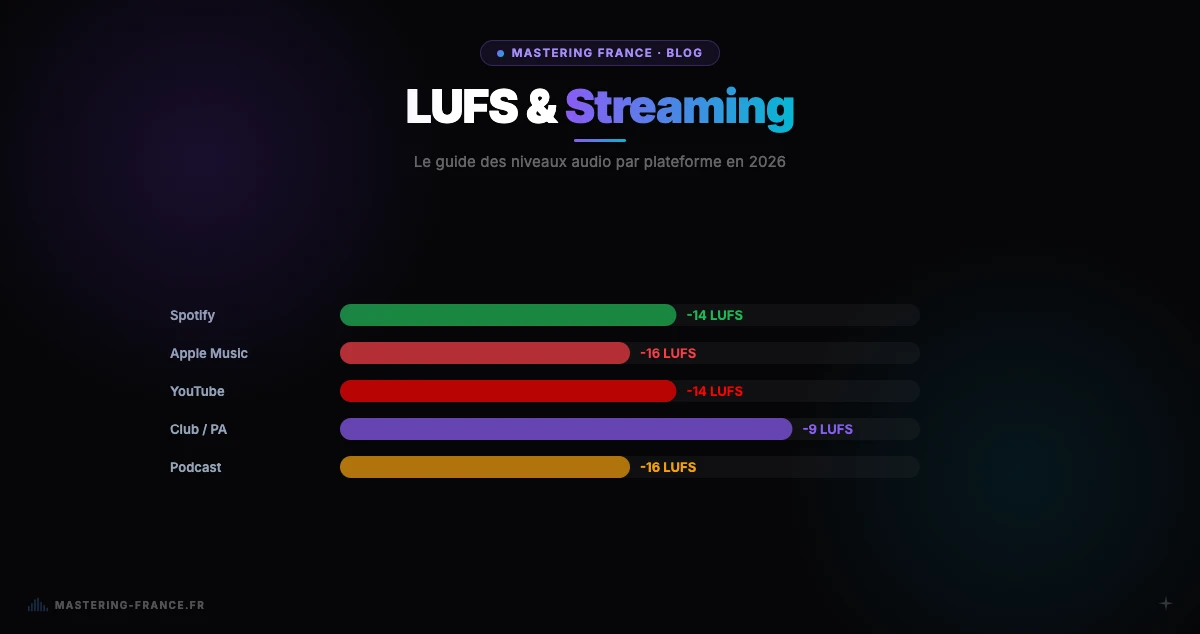
- Target LUFS: -10 to -12 integrated (Spotify normalizes to -14, but rap sounds better slightly louder)
- True Peak: -1 dBTP maximum
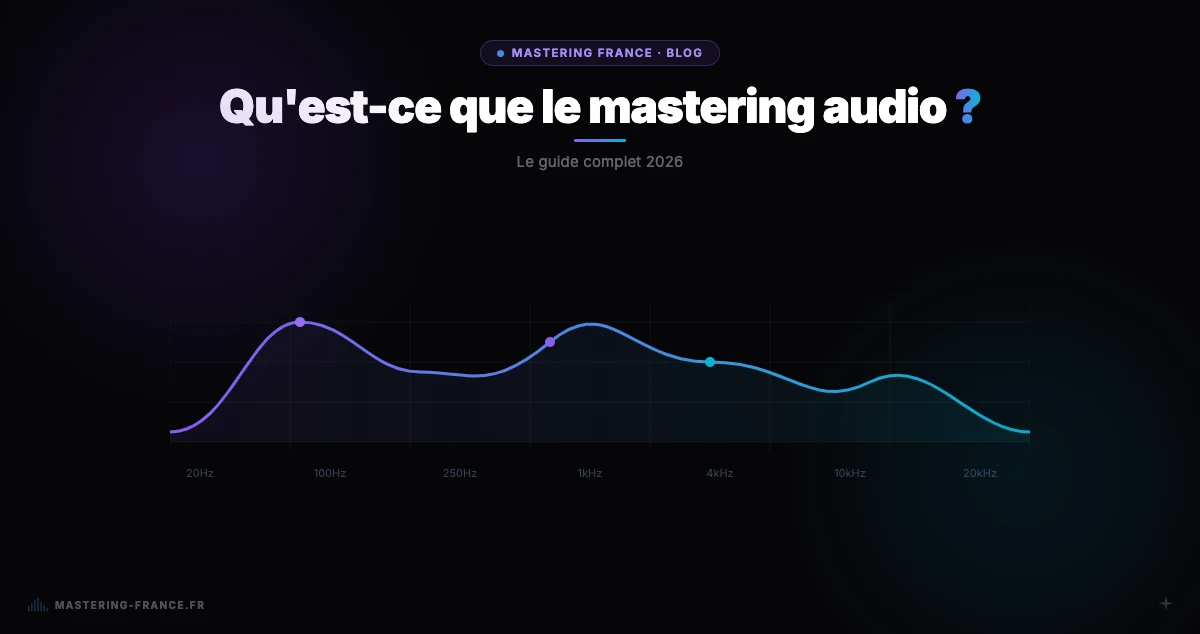
- Vocals: boosted presence between 1 and 4 kHz — the intelligibility zone
- 808: mono below 60-80 Hz — stereo 808s disappear on AirPods and small systems
- Kick: body at 60-80 Hz, snap at 2-4 kHz
- Hi-hats and cymbals: air above 12 kHz for sparkle and movement
- LRA (Loudness Range): 4 to 7 LU for commercial rap — dynamic but not too much
The main challenge: vocal / 808 balance
The frequency conflict
In rap, vocals and the 808 often share the same frequency bands in the low and low-mid range (80-250 Hz). If the two elements aren't clearly separated in the mix, mastering can't separate them. The result is a muddy sound where the vocal is masked by the 808.
The solution: sidechain compression
A good rap mixer uses sidechain compression so the 808 ducks slightly when the vocal arrives — a technique used on virtually all productions by Travis Scott, Future, or Playboi Carti. This technique creates space for the vocal without sacrificing 808 power.
What LUFS for rap on Spotify and Apple Music?
Spotify normalizes to -14 LUFS, but the biggest rap hits are typically mastered between -9 and -11 LUFS integrated — Drake 'Passionfruit': -11.3 LUFS, Kendrick Lamar 'Humble': -9.8 LUFS. Spotify turns the volume down a few dB, but the controlled compression and higher level deliver punch and presence that -14 LUFS doesn't always achieve in rap.
Target -11 LUFS as a reference point. Avoid going below -9 LUFS — dynamic loss becomes audible and the sound becomes fatiguing, particularly on vocals.
How to make 808s sound good on all systems
The stereo 808 problem
Stereo 808s disappear on AirPods (mono), low-end Bluetooth speakers, TVs, and computer speakers — all mono or with speakers incapable of reproducing stereo sub-bass. If the 808 is the central element of your beat, it must be mono below 70-80 Hz.
The mono check
Hit the Mono button in your DAW and listen. If the 808 disappears or significantly loses volume, there's a phase or stereo issue to fix in the mix. A properly mono 808 stays consistent in both mono and stereo.
Common mistakes in rap mastering
808s left in stereo
This is mistake number one. Stereo 808s disappear on half of playback systems — AirPods, Bluetooth speakers, TVs. Always put the 808's sub-bass in mono below 80 Hz in the mix.
Over-sibilant vocals
Too many frequencies between 5 and 8 kHz on the vocal creates aggressive sibilance (the 's' and 'sh' sounds that sting). Mastering compression will amplify this problem. Add a de-esser in the mix rather than in mastering.
Kick with no body
A kick lacking punch between 60 and 80 Hz cannot be 'recovered' in mastering. Kick body is built at the mixing stage — if it's not there, mastering can't create it.
Over-compressed mix
If you've already crushed your mix with an aggressive compressor or limiter on the master bus, mastering cannot restore the lost dynamics. Always export your mix without processing on the master output.
How Mastering France handles rap and hip-hop
Mastering France's AI automatically detects the characteristics of a rap or trap mix: 808 presence, rhythmic structure, vocal dynamics, hi-hats. It automatically applies tailored processing: vocal presence enhancement, mono sub-bass handling, transparent compression preserving kick and snare attack. The Streaming preset is recommended for Spotify, the Club preset for DJ sets and PA playback.